



In industrial scenarios, dexterous grasping has long been plagued by two major pain points: “perceptual blind spots” and “structural durability.” Occlusion caused by the end-effector approaching an object makes it difficult for the system to accurately determine the state at the exact moment of contact. Meanwhile, harsh operating conditions involving high-frequency, continuous heavy-load operations can easily lead to a decline in grasp stability over time.
RoboScience is about to release the RexClaw, a three-fingered dexterous hand equipped with its self-developed fingertip visuotactile sensor, FingerEye. By bridging the continuous perception pathway from pre-contact to post-contact, RexClaw completely resolves the industry pain point of occlusion in the “last centimeter.” Within a compact three-finger configuration, RexClaw achieves 250 N of whole-hand grip force, ±0.1 mm repeatability, and a lifespan exceeding 1 million cycles. It translates the industrial-grade requirements for continuous heavy-load and long-term stable operation directly into the dexterous hand itself, truly delivering on the promise of being capable of grasping, stable in grasping, and durable for long-term use.
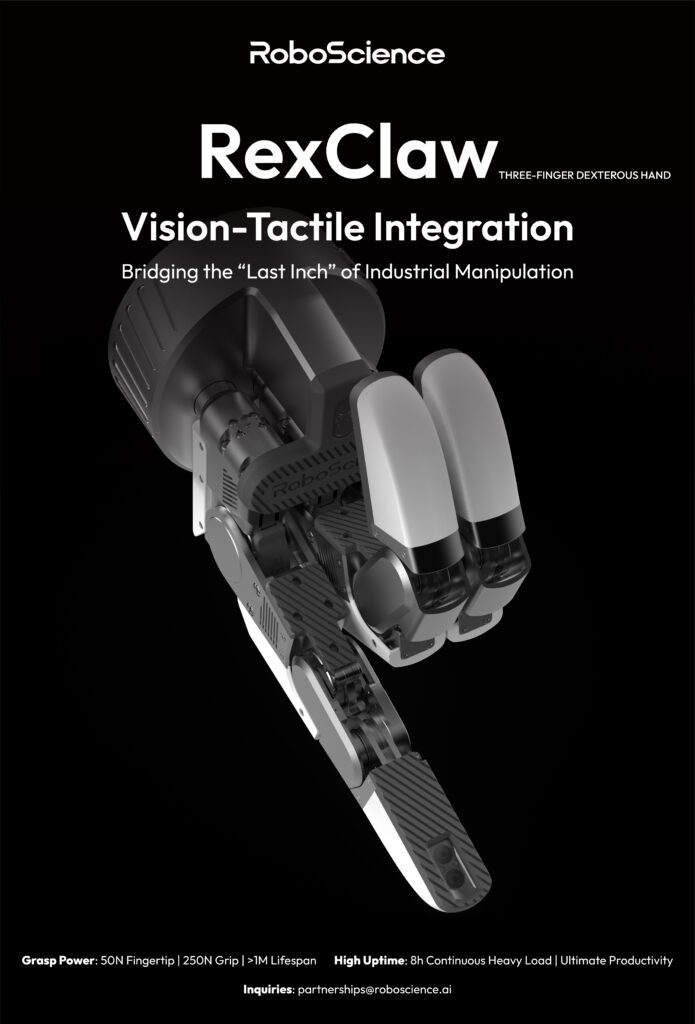
Closing the Loop on Physical Touch: Bridging the “Last Centimeter” of Industrial Manipulation
In real-world applications, dexterous hands and robots must handle packages in varying poses on assembly lines, workpieces with different hardness levels, and materials that may change at any time. A vast number of grasping tasks are performed almost entirely relying on vision. However, vision has a natural limitation: the closer the end-effector gets to the object, the more likely the wrist and head-mounted cameras are to be occluded by the end-effector itself. Additionally, traditional tactile sensors only provide signals after physical contact has occurred. The “last centimeter” before grasping has long been a perceptual blind spot for robots.
RoboScience innovatively introduces FingerEye, integrating vision and touch. This allows the robot not only to understand contact states through tactile feedback but also to determine spatial positioning visually and adjust its actions accordingly. It bridges the “last centimeter” of industrial operations, solving the dilemma where pure vision fails due to occlusion, and pure traditional force control requires re-tuning for every different part. The FingerEye-equipped RexClaw restores the physical sense of touch, bridging the “last centimeter” of industrial manipulation.Powered by FingerEye: Vision Preceding Touch for Continuous Visuotactile Perception
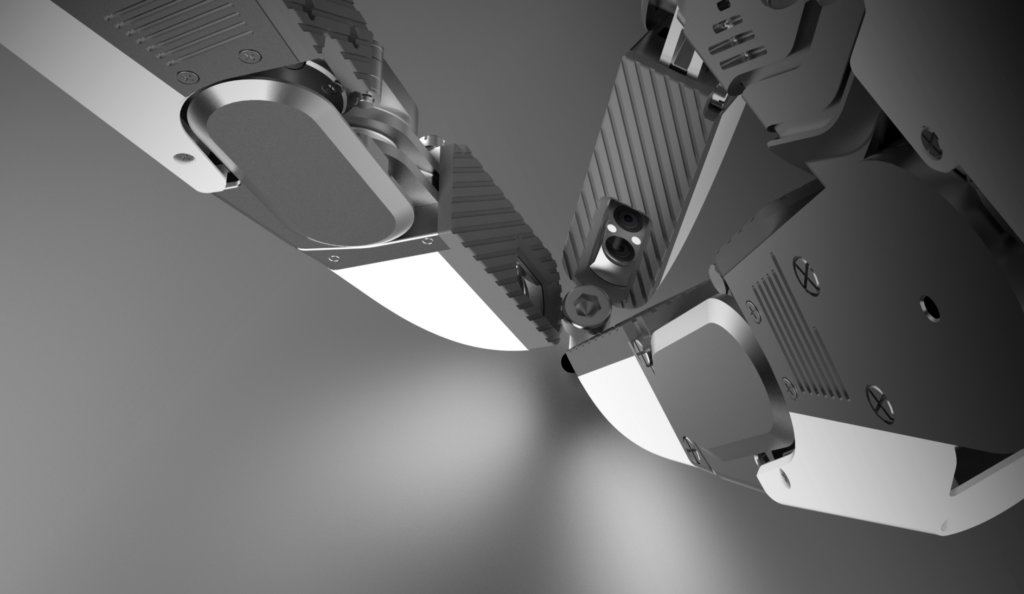
As the core perception unit of RexClaw, FingerEye is fully self-developed by RoboScience. It embodies the design philosophy of “algorithm-defined hardware”: starting from the perceptual information required by an embodied foundation model to complete manipulation tasks, it integrates stereo vision and tactile sensing into a compact fingertip module, creating a continuous perception pathway from pre-contact to post-contact.
During a complete grasp, FingerEye continuously provides perceptual support:
Pre-contact:Fingertip stereo cameras provide near-field 3D depth information, aiding in the determination of target pose, grasp position, and relative distance.
Post-contact:Tactile sensing feeds back contact force information, supporting compliant grasping and force control.
Throughout the process:Visual and tactile signals are unified within the same perceptual coordinate frame, providing a continuous and stable data stream for grasp planning and control strategies.
Leveraging this perceptual data, RexClaw integrates near-field observation and contact feedback into a closed-loop grasp control system. The control strategy fuses fingertip images, target markers, and the robot’s proprioceptive state to determine the timing of approach, closure, and lifting in real-time, adjusting actions based on contact states. Targeting scenarios such as industrial mixed-part picking, bin picking, and warehouse order fulfillment, RoboScience is continuously advancing targeted grasping capabilities in cluttered and occluded environments.
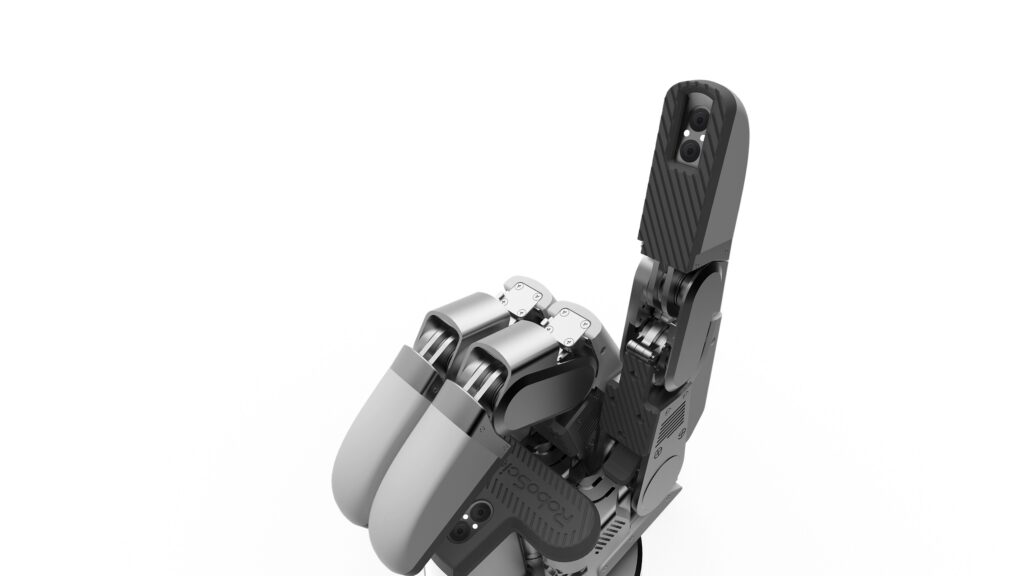
The value of continuous perception for fine manipulation has also been validated in real-world tests. In fine manipulation experiments involving standing up coins, grasping fragile potato chips and tissues, extracting thin letters, and syringe pushing/pulling, FingerEye significantly improved task success rates by over 50% in the vast majority of test scenarios compared to traditional solutions relying solely on wrist cameras or monocular vision. This fully validates the core value of continuous visuotactile perception.
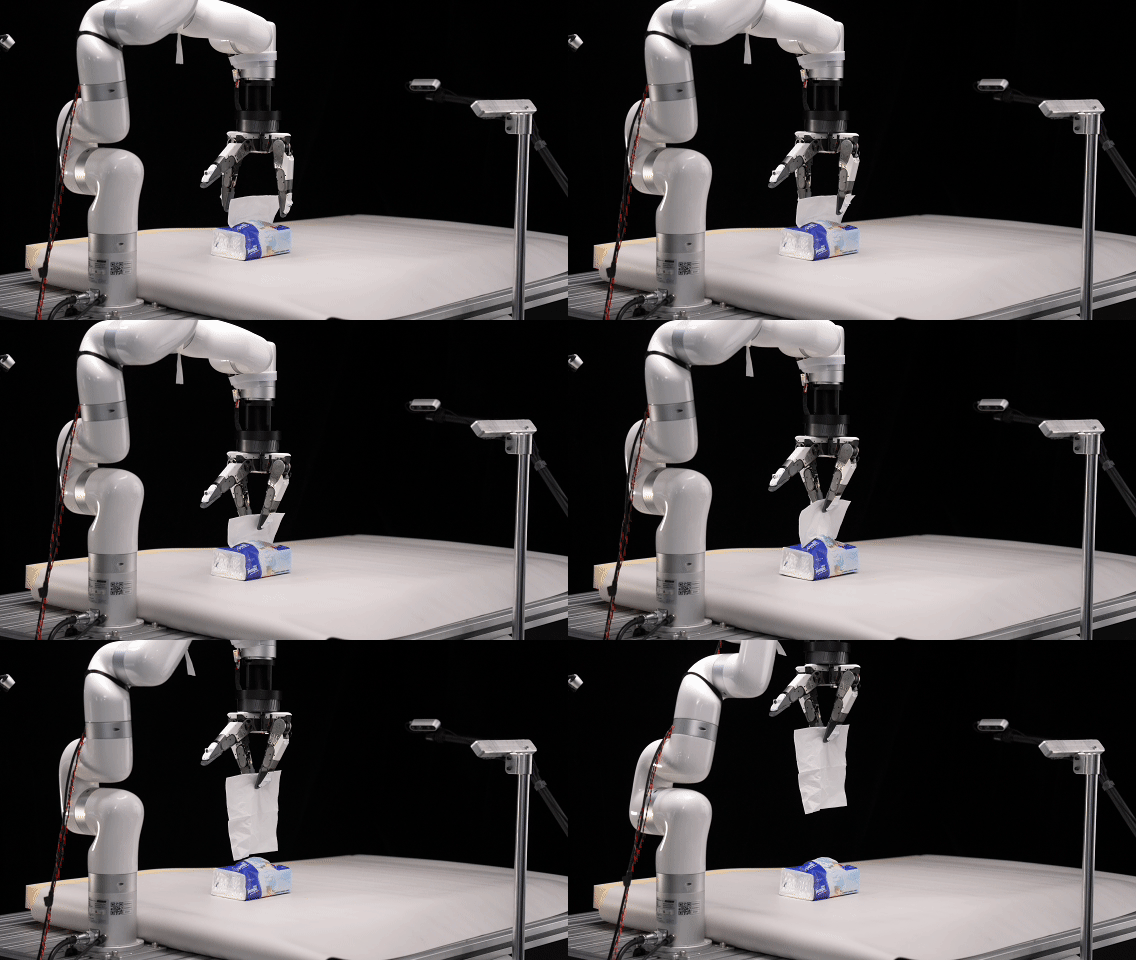
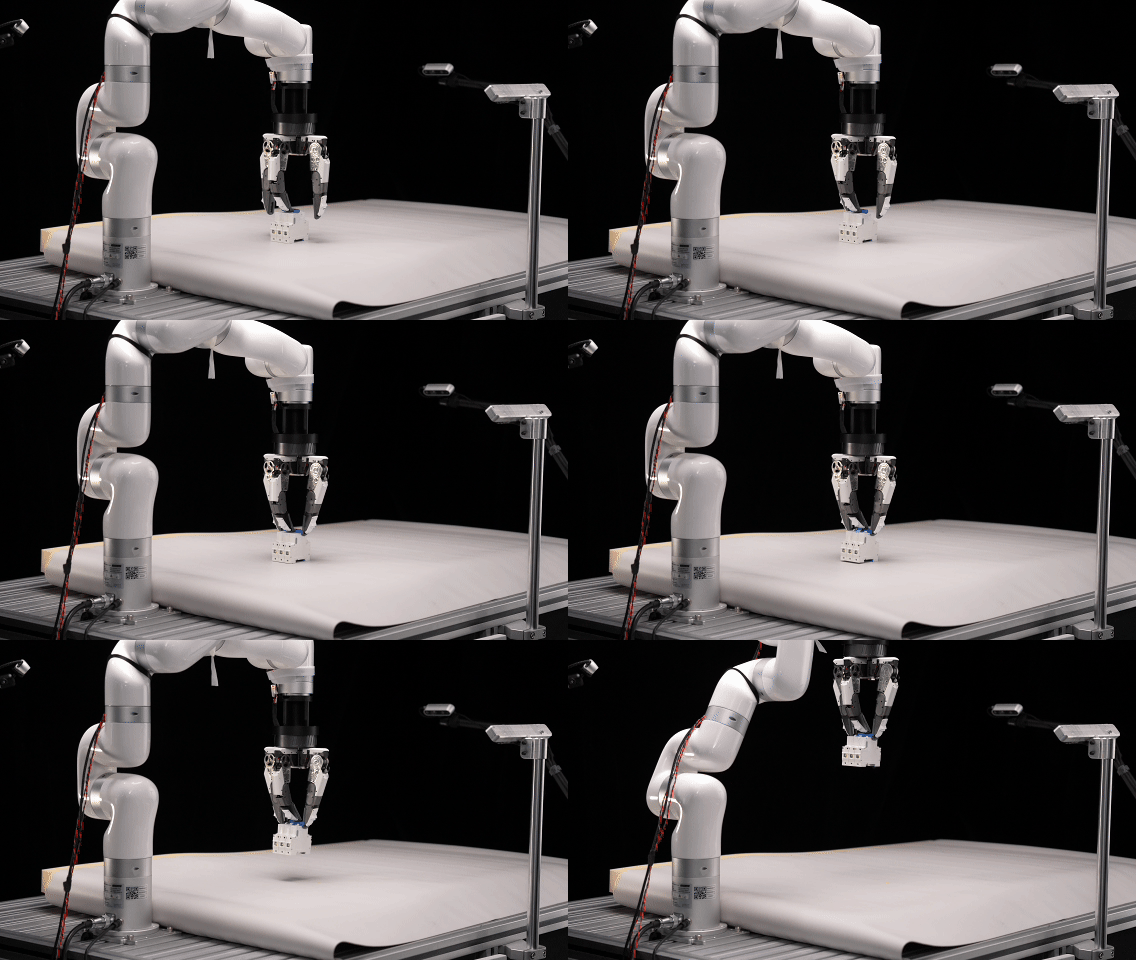
Designed for long-term use on the industrial floor, FingerEye also balances reliability and cost. Unlike visuotactile solutions that rely on elastomer deformation, FingerEye uses a technical approach combining stereo vision and tactile sensing. This moves the starting point of perception to before contact while avoiding reliance on elastomer structures, mitigating reliability issues caused by wear and contamination.
FingerEye is manufactured using common low-cost components and 3D-printed parts. Its compact, modular design supports adaptation to different end-effectors and rapid iteration, laying the foundation for large-scale deployment.
RexClaw: Redefining the Grasping Logic of Industrial End-Effectors
In industrial manufacturing, production line flexibility has always been a significant bottleneck in automation upgrades. Traditional solutions often rely on dedicated fixtures for grasping, requiring a new end-effector every time the process or product changes. While dexterous hands offer greater versatility, they have long been constrained by insufficient force output, low reliability, and complex maintenance, making it difficult for them to truly enter industrial production lines.
In reality, the morphological variations of industrial objects are relatively limited—boxes, material trays, workpieces, and bags. The vast majority of scenarios can be completed using enveloping grasps and parallel jaw grasps. Rather than pursuing more complex human-hand biomimetic structures, what industrial users truly care about is whether a dexterous hand can complete tasks stably and efficiently over the long term. Therefore, for industrial production lines, the real need is not more complex degrees of freedom, but three more practical issues: capable of grasping, stable in grasping, and durable for long-term use.
Based on this philosophy, RoboScience introduces the RexClaw three-fingered dexterous hand. Its transmission system utilizes a design with multi-stage high speed ratios, high redundancy strength, and low backlash, ensuring ultimate control precision and operational stability. Meanwhile, through a highly compact integrated architecture, all drive units are housed within the hand, balancing formidable performance with extreme deployment flexibility and industrial-grade reliability.
RexClaw features 11 degrees of freedom (8 active, 3 passive), with tactile sensors deployed on all three fingertips and the palm. It does not deliberately pursue anthropomorphic form, but rather concentrates design resources on the capabilities most valued on the industrial floor: high output, high reliability, ease of maintenance, and long lifespan.
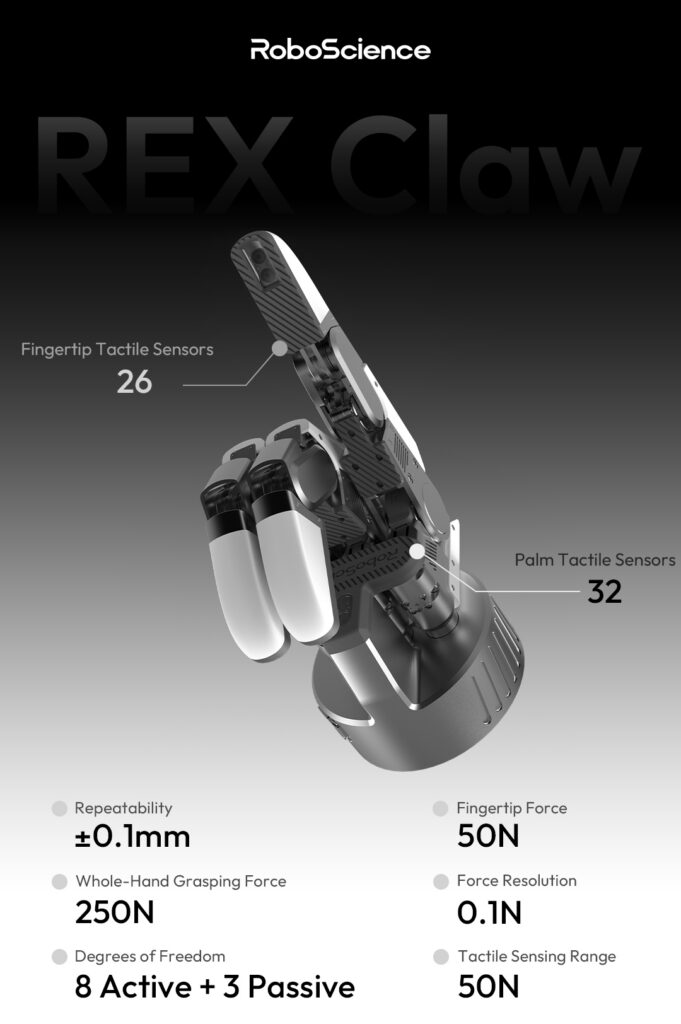
- Capable of Grasping: 50 N fingertip force, 250 N grip force, max payload up to 25 kg.
Industrial production lines have never been concerned merely with the instantaneous burst force a hand can generate, but rather how long it can sustain stable output. RexClaw outputs 50 N of fingertip force. This capability is supported by high-energy-density motors, a high-ratio transmission system, and a transmission chain designed entirely for loaded conditions rather than optimized for no-load performance. This means RexClaw can enter workstations that traditionally require dedicated tooling, such as full-box handling and heavy-part machine tending, eliminating the need for enterprises to design dedicated fixtures for heavy-duty stations. This significantly enhances the versatility of the end-effector, ensuring objects can be continuously grasped. Furthermore, with a whole-hand grip force of 250 N and a maximum payload of 25 kg, RexClaw can steadily hold heavy items like metal workpieces and tool handles. It also switches freely between powerful grasping and gentle manipulation—capable of a firm grip while also having a delicate pinch, avoiding damage to fragile items or precision parts.
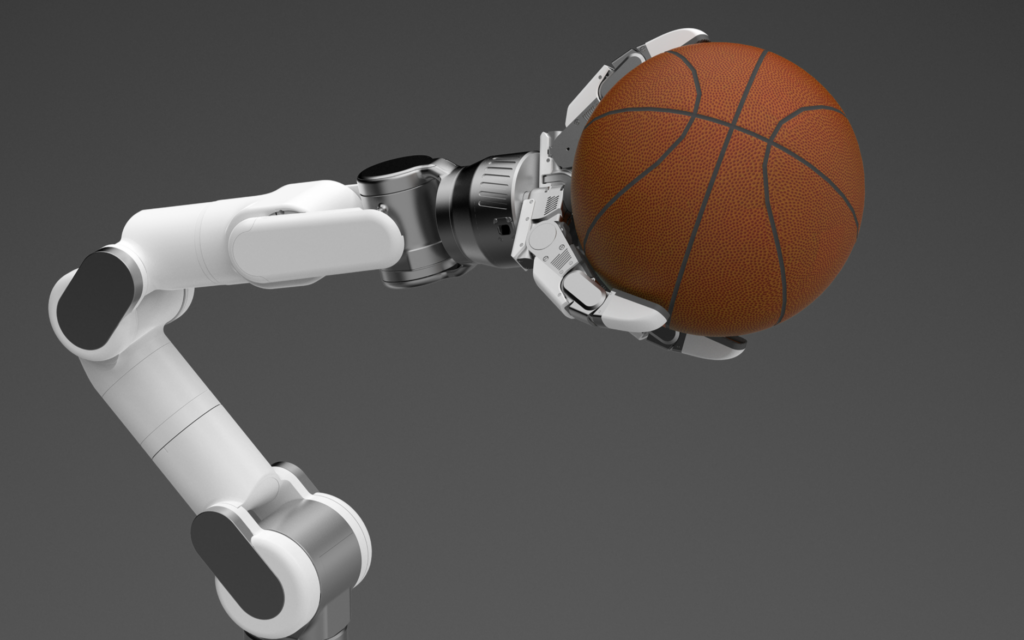
- Stable in Grasping: Millisecond-level anti-slip response, full-link precision control.
On high-speed industrial production lines, a single accidental slip can lead to scrapped workpieces and declining yield rates, or even unplanned downtime for the entire line. True anti-slip starts with the subtle perception before a slip occurs. RexClaw is densely equipped with 110 high-sensitivity tactile points across the three fingertips (26 each) and the palm (32), accurately capturing subtle contact force variations at the 0.1 N level. Relying on 1000 Hz high-frequency control, the system completes a “perception-decision-adjustment” closed loop every 1 millisecond, dynamically locking the workpiece before a slip occurs. Additionally, the FingerEye visuotactile sensor on the fingertips gives the dexterous hand integrated vision-touch capabilities, significantly reducing missed or false grasps. Once an anomaly occurs, it can be identified and corrected immediately at the current workstation.Stability goes beyond perception; it stems from robust mechanical properties. Each finger joint of RexClaw features a dual-encoder design, combined with a low-backlash transmission scheme, extending control precision to every joint movement. This not only prevents excessive force from damaging fragile objects but also reduces slips caused by insufficient gripping force. It further lowers operational noise and extends the lifespan of the transmission system. In industrial scenarios such as repetitive trajectory execution and high-precision assembly, RexClaw maintains consistently stable and predictable performance.
- Durable for Long-Term Use: 8 hours of continuous heavy-load operation, lifecycle exceeding 1 million cycles.
For industrial manufacturing, the greatest cost of an end-effector is often not the procurement cost, but the long-term maintenance and operational cost. The most common cause of downtime for traditional dexterous hands in industrial settings is not hardware failure, but periodic maintenance required by complex mechanisms, such as cable replacement, tension adjustment, and lubrication. These maintenance tasks not only increase operational costs but also directly disrupt production line takt time.RexClaw reduces these maintenance needs from the hardware architecture level. The entire hand utilizes a fully direct-drive architecture, with all drive units integrated inside the hand, taking up no space on the robot arm’s forearm and allowing for direct deployment on existing robotic platforms. It also eliminates the need for periodic replacement of consumables and tension maintenance associated with traditional tendon-driven mechanisms. Compared to linkage solutions, the direct-drive architecture offers higher space utilization, with no singularities throughout its range of motion, resulting in more uniform and stable output and fundamentally avoiding the issue of being “unable to exert force” in specific postures.The RexClaw transmission system is strictly designed for loaded conditions, with ample margins in strength and stiffness. It possesses strong impact resistance, capable of withstanding daily bumps and misoperations on the industrial floor. The entire hand is designed for 8 hours of continuous heavy-load operation, with a design lifecycle exceeding 1 million cycles under rated load, providing a guarantee for long-term stable operation.
Driving Industrial Dexterous Manipulation Towards Large-Scale Application
From being able to stably complete grasps to autonomously understanding tasks, planning actions, and executing operations, the combination of RexClaw and Visics is evolving industrial robotic end-effectors from “dedicated tools” into “general-purpose manipulation platforms.” In the future, whether facing continuously changing product SKUs or more complex and diverse production environments, robots will possess stronger generalized manipulation capabilities.
For RoboScience, RexClaw is not just a dexterous hand product, but a crucial component of its embodied AI technology ecosystem. As highly reliable hardware and general-purpose embodied foundation models continue to merge, robots will achieve large-scale deployment in more real-world scenarios, including industrial manufacturing and logistics warehousing. This will drive industrial automation from “execution” to a new stage of “understanding, decision-making, and autonomous completion of complex operations.”
Inquiries: partnerships@roboscience.ai