



For a long time, getting a robot to work properly has required far too much specialized expertise. We need to master motors and motion control, otherwise it’s just a lifeless block of metal. We need to dive deep into manipulation models, otherwise it just flails around aimlessly. We probably also need to be proficient in perception and motion planning, otherwise it either hits walls or grabs the wrong things.
Assembling a team of a dozen people and spending countless hours and effort debugging it might only get you to a state where it “kind of works.” And this often comes with many preconditions—change the scenario, and you have to start all over again. But at RoboScience, we have always believed that robots should adapt to humans, not the other way around.
Today, we are launching Visics-Agent. It is your robot assistant. It understands your voice commands, remembers your habits, and learns the tasks you teach it.
Visics-Agent: Understands,Learns,and Executes
Whether it’s tidying up a cluttered desk or sorting different types of items, you only need to tell Visics-Agent what you want to do, and leave the rest to its own problem-solving.
Of course, our expectations for it go much further.
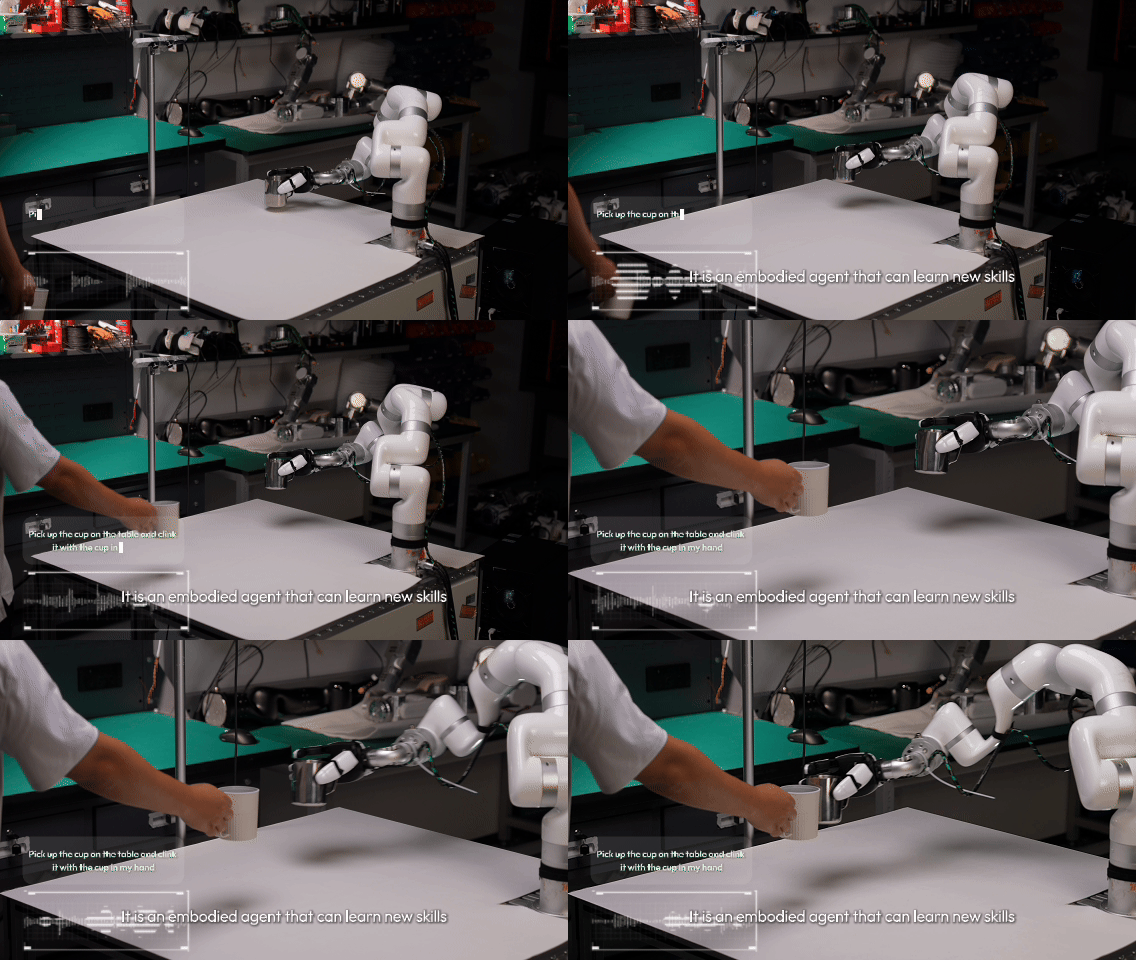
For example, it should understand what I say, acting like an extension of my own arm through voice control:
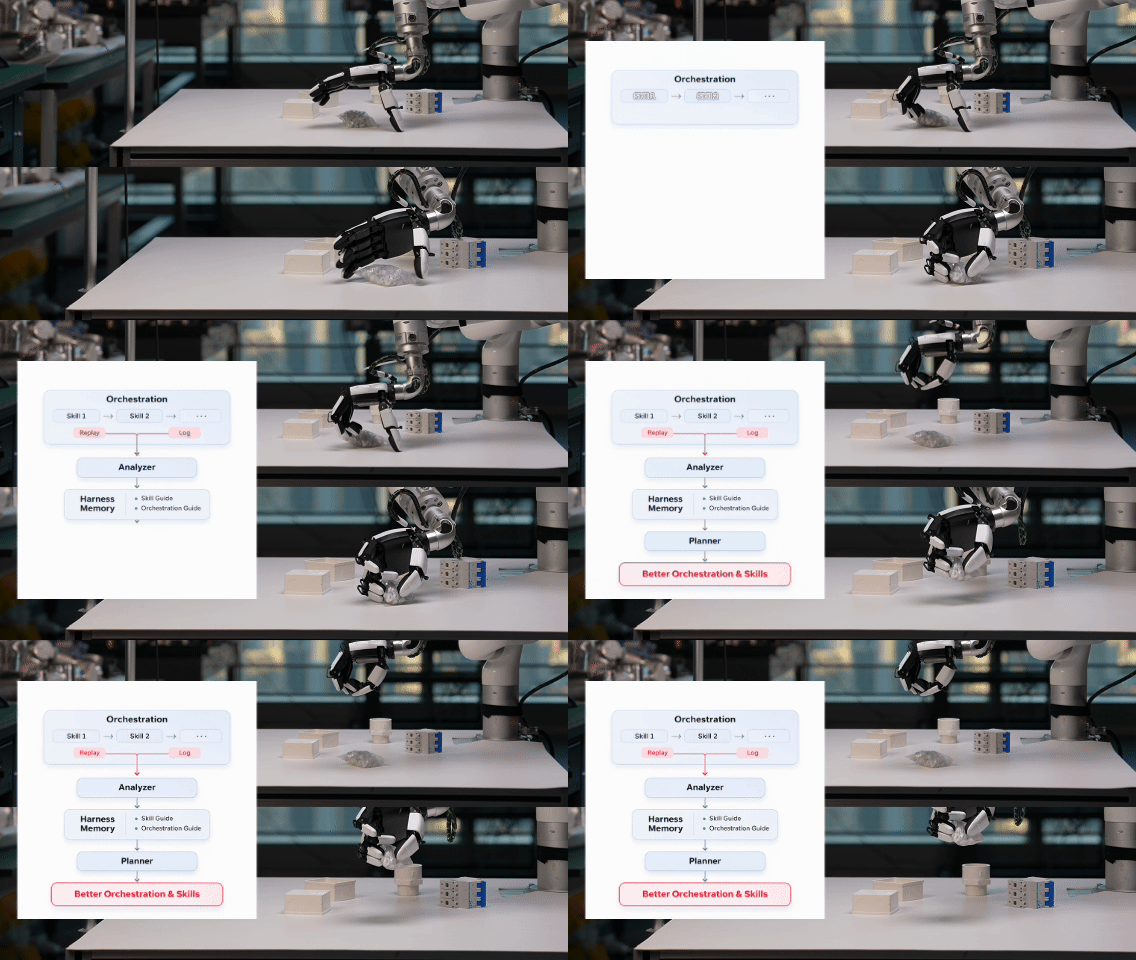
For example, when it makes a mistake, it shouldn’t just retry infinitely. It should summarize the experience, figure out the patterns, and succeed next time:
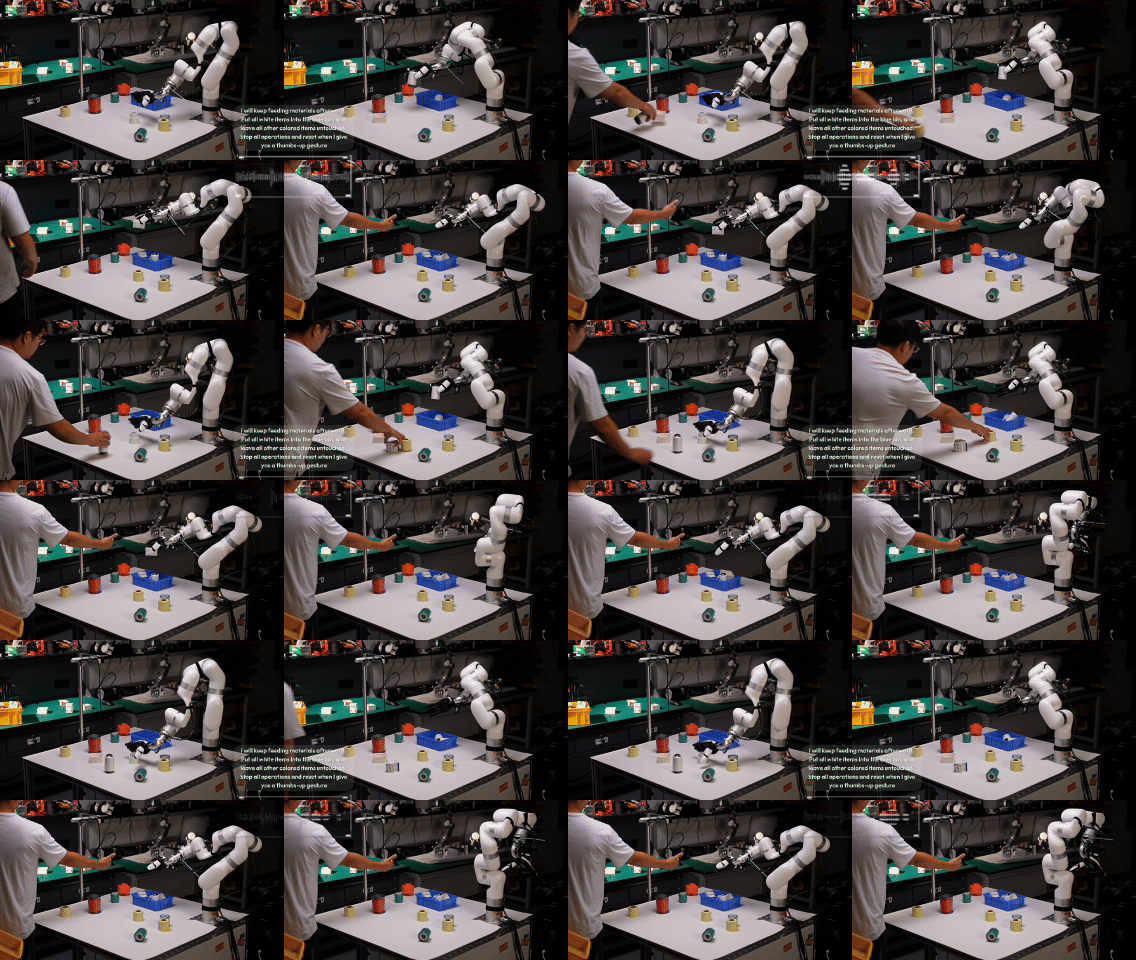
For example, it actively adapts to human pace—no need for me to carefully accommodate it, and it can even handle interruptions at any time:
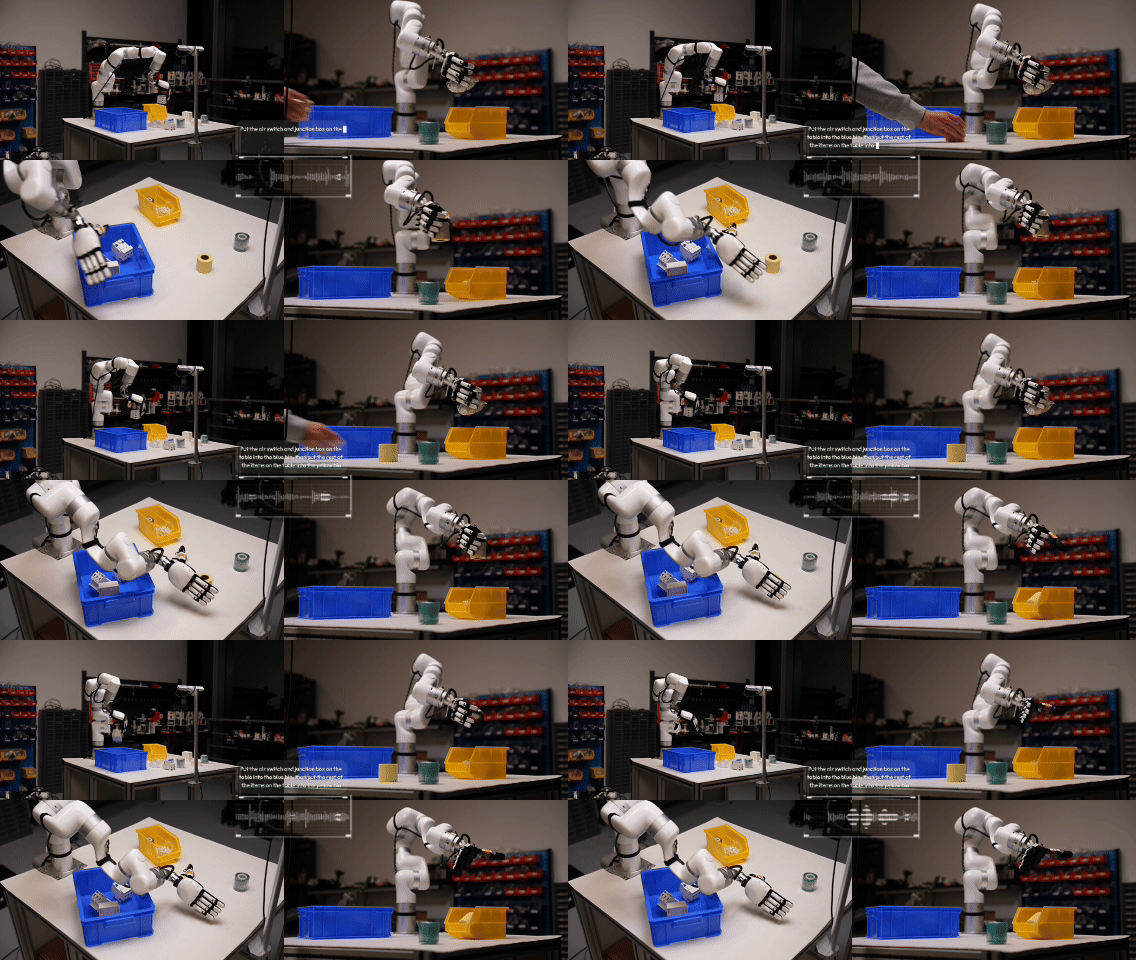
Even if I give complex instructions, it can understand and execute them:
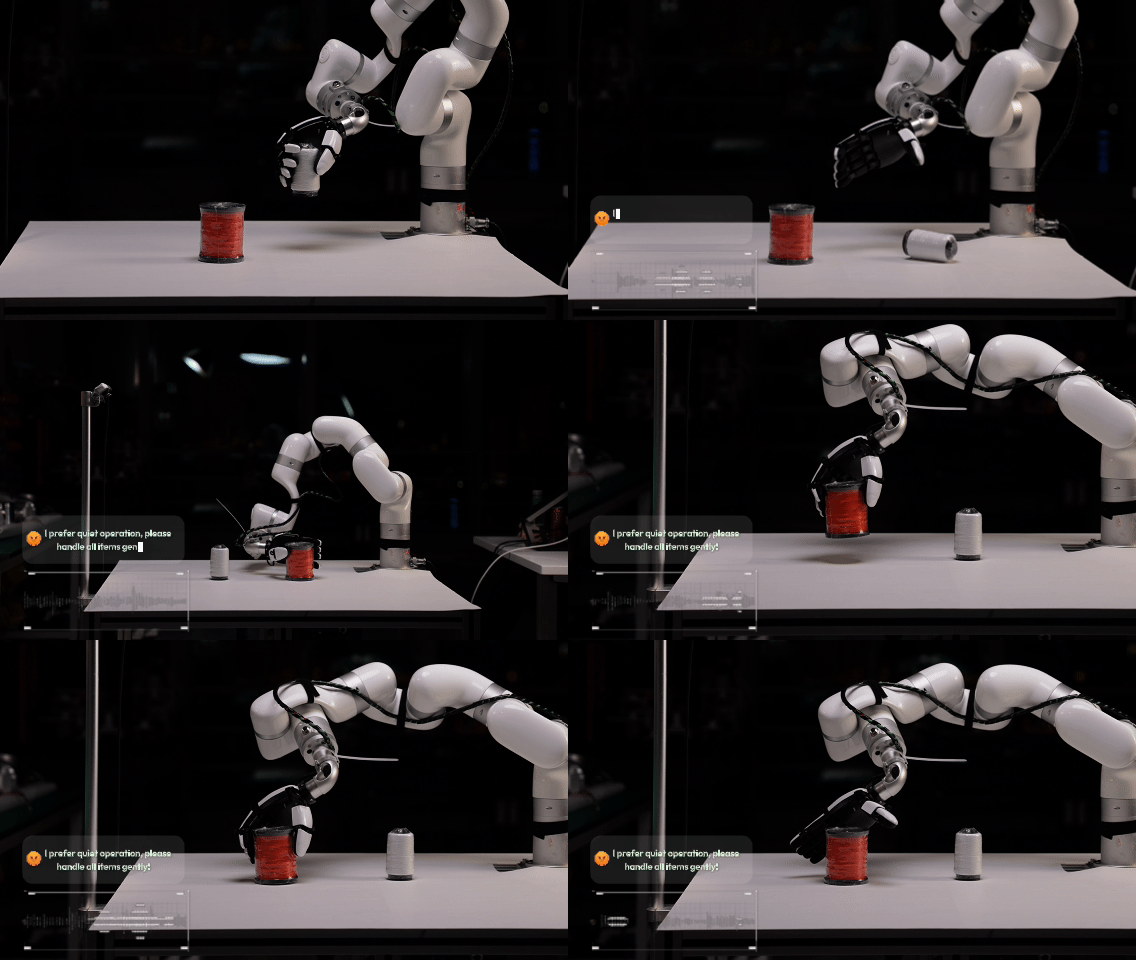
We are all unique individuals with different habits and different ways of doing things. So, it should also be able to remember my habits:
And maybe, I can even teach it some reliable (or highly unconventional) skills:
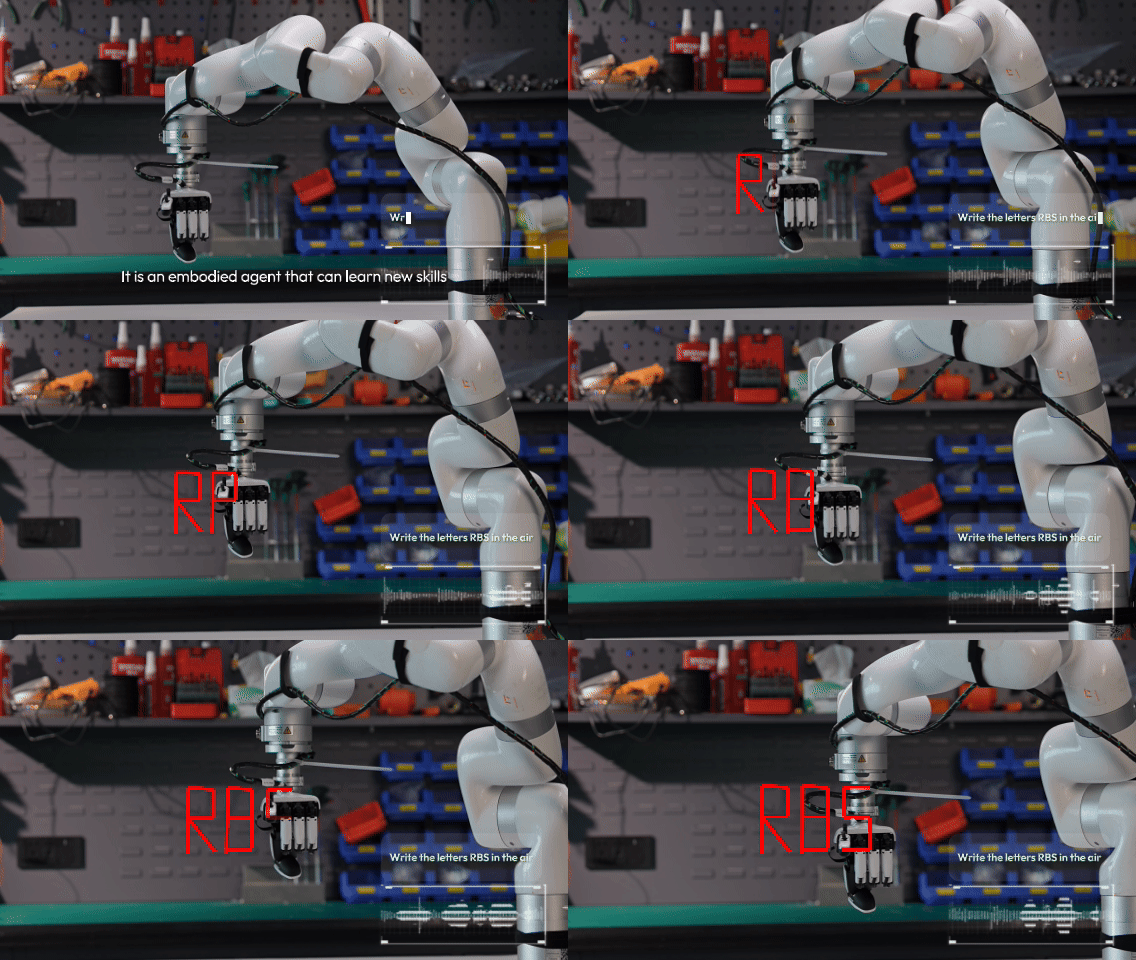
We want it to be an intelligent assistant that can be taught new skills, can work independently, and accumulates experience through every task.
This is the exact vision that drove us to build Visics-Agent.
Today, through our cloud-based Embodied-AI-as-a-Service (EaaS), we want to open up this capability to more robotics developers, giving more people the chance to have a truly personal robot assistant.
Using a dexterous hand connected to our API via Tencent Cloud, there is no need to collect data, write code, or perform fine-tuning. Users simply issue commands, and it completes tasks autonomously.
Teach Anything: Teach Once, Remember Forever
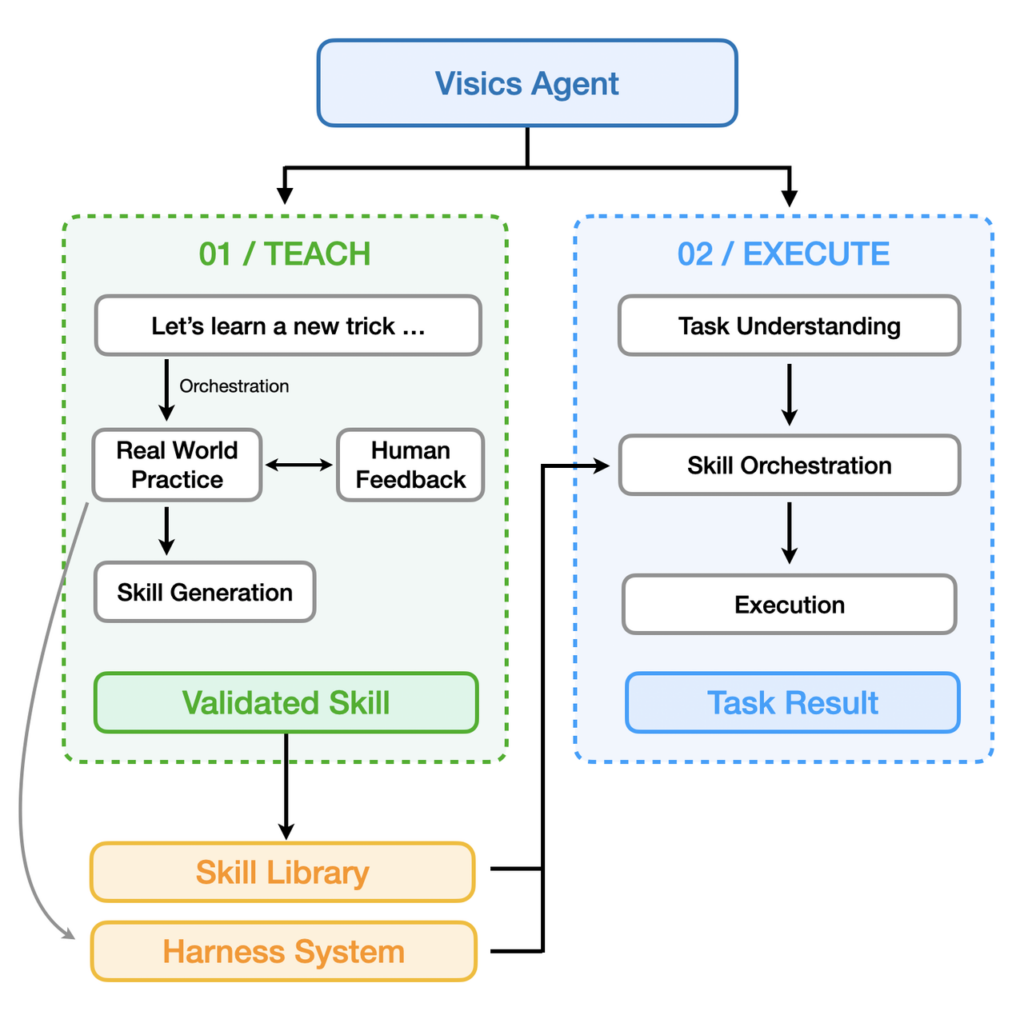
To enable robots to learn new skills, we divided the Visics-Agent workflow into two phases: Teachand Execute.
In the Teach phase, you can instruct the robot just like teaching a person, using natural language. If it doesn’t get it right the first time, you can continue correcting it until you are satisfied with the result.
At this point, you just need to tell it: “Remember this, and do it this way from now on.”
Visics-Agent will then compile this successful experience into a reusable skill and add it to its skill library. In the future, when encountering similar tasks, it can directly invoke these learned skills. Furthermore, when facing new scenarios, Visics-Agent can combine different skills to create a synergistic 1+1 > 2 effect.
Harness Anything: The More It’s Used, The Better It Gets
Beyond the teaching mechanism, we also designed a Harness system, allowing the robot to accumulate experience from real-world results and feedback, continuously optimizing its existing skills.
This means that teaching a robot a skill isn’t the finish line; it’s the starting point for continuous improvement.
For example: during a desk-cleaning task, the desk is cluttered, and the robotic arm itself blocks the camera’s view. This makes it difficult for the robot to plan its next move. In this case, Visics-Agent attempts to lift the robotic arm first to clear the view, successfully completing the next step of motion planning.
“In highly cluttered scenes with severe occlusion, prioritize securing the field of view.” This becomes a piece of experience it accumulates. In the future, when encountering similar situations, it will proactively clear its view before planning its next move.
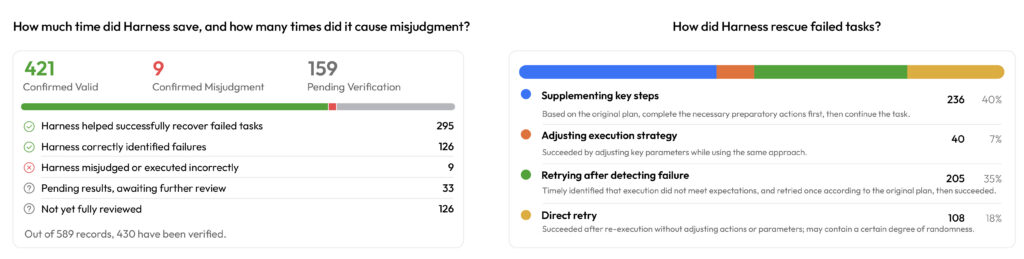
In our demo at the Tencent Global Digital Ecosystem Summit, after a month of uninterrupted real-world testing, Visics-Agent accumulated dozens of effective experiences, boosting the success rate of single skills to over 85%. The Harness system played a positive role in the vast majority of tasks:
Of course, real tasks are often more than just executing a single successful grasp.
We also want the robot to understand complex instructions and reliably complete a sequence of tasks—and when encountering unexpected situations, it should figure out a solution rather than just stopping. This is the core problem the Harness system focuses on solving.
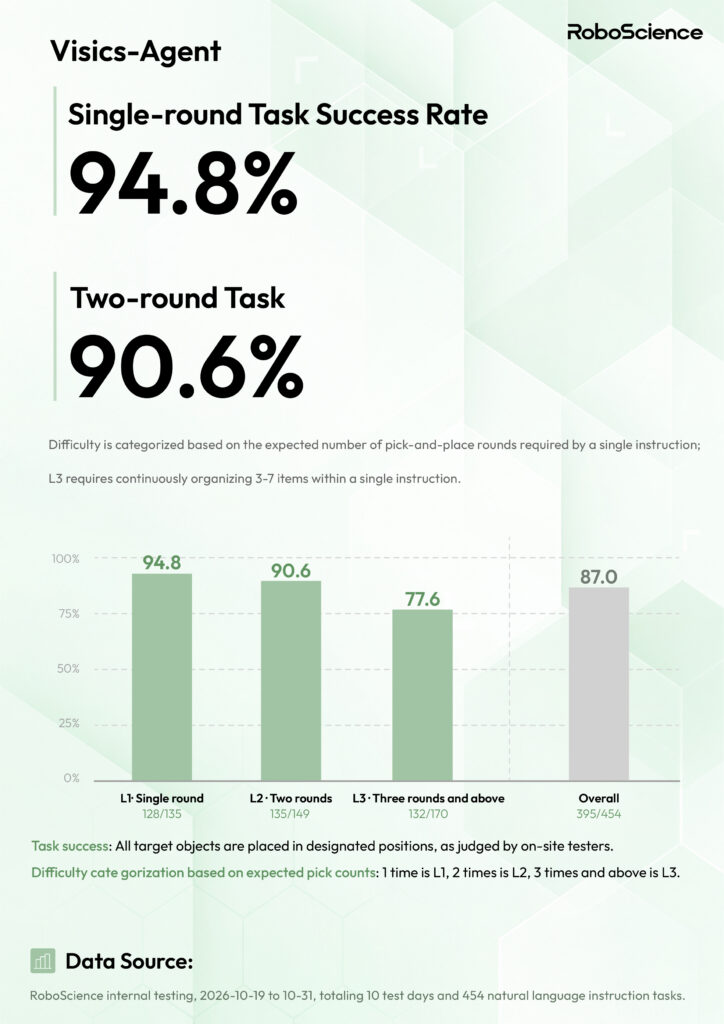
In actual testing, we divided tasks into three difficulty levels: L1 to L3. L1 and L2 mainly involve 1-2 grasp-and-place actions, while L3 requires completing 3-7 consecutive operations, as well as understanding complex rules like categorization, exclusion conditions, spatial relationships, and execution order.
For example, a typical L3 task is: “Take the last three items. Except for the roll of tape, put the other two into the box first. Then, place the bundle of red wire on the desk to the left of the tape.”
In an internal test of 454 task instructions, we adopted strict end-to-end acceptance criteria—only fully complying with the instructions and completing all operations counted as a success. The success rates for L1 and L2 tasks exceeded 90%, and the success rate for complex L3 sequential tasks reached 78%.
Currently, the main challenges for L3 tasks still stem from various unexpected events in the physical environment. For instance, objects falling off the desk or moving out of the robot’s workspace are difficult to recover from autonomously. We are working on teaching the robot to “handle objects gently” and predict potential risks before executing actions, thereby adjusting its grasping and motion strategies in advance to avoid these accidents as much as possible.
Adapt Any Hand: Swap Hands, Keep Working
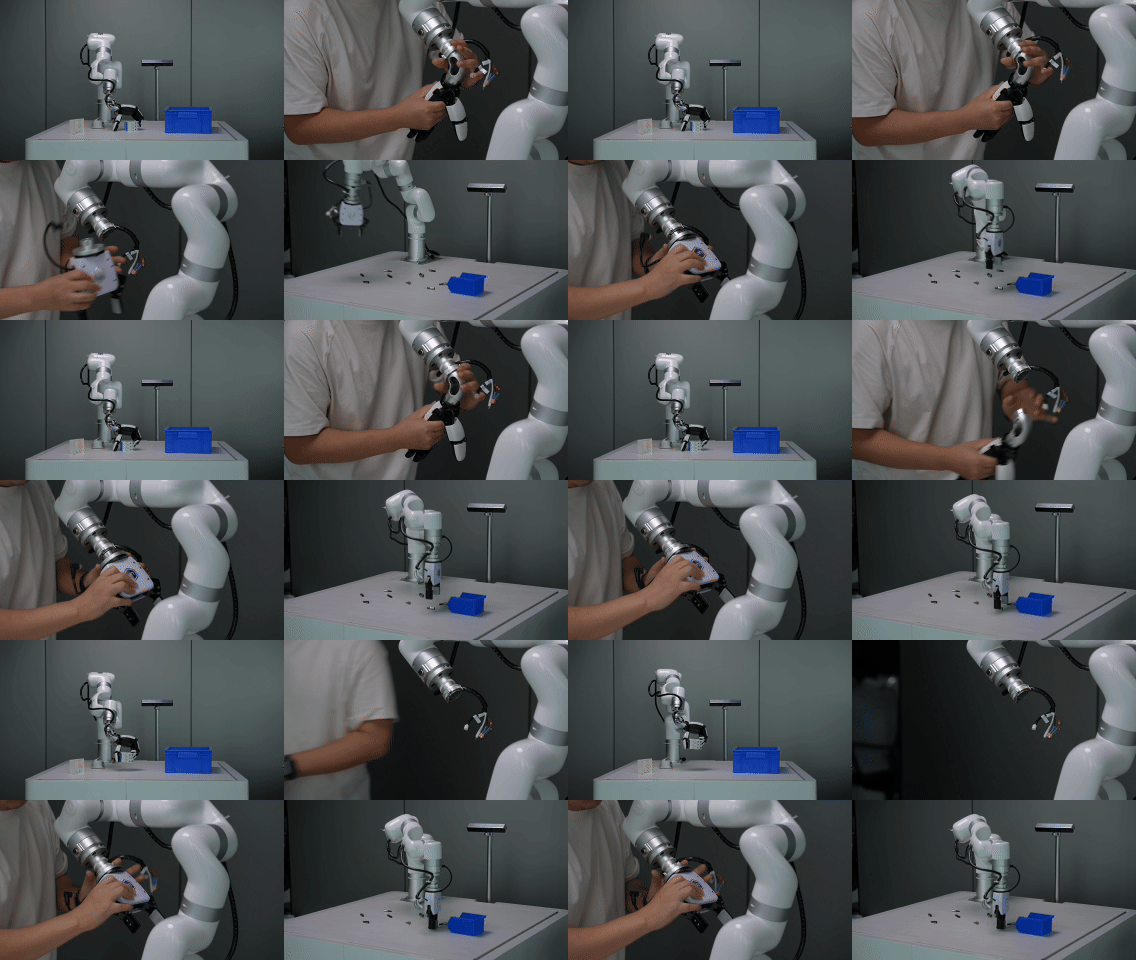
Visics-Agent is powered by Visics, RoboScience’s self-developed general-purpose manipulation foundation model. Thanks to this, we can support different types of end-effectors, including various dexterous hands, two-finger grippers, and three-finger grippers, with the ability to switch between them in under 30 seconds.
Visics-Agent supports zero-shot cross-hand capabilities, meaning there is no need to retrain grasping models for every type of end-effector. Whether you have a simple gripper or a sophisticated dexterous hand, we want you to be able to plug into this capability quickly.
Live at the Expo: Real-Time Experience
Recently, we brought Visics-Agent to the Tencent Global Digital Ecosystem Summit. Driving a desktop-level robotic arm, we demonstrated its ability to execute daily tasks like desktop organization, attracting many attendees to stop and watch:
Of course, we don’t want it to only work on desktops. Change the scenario or change the type of task, and it should be able to keep up.
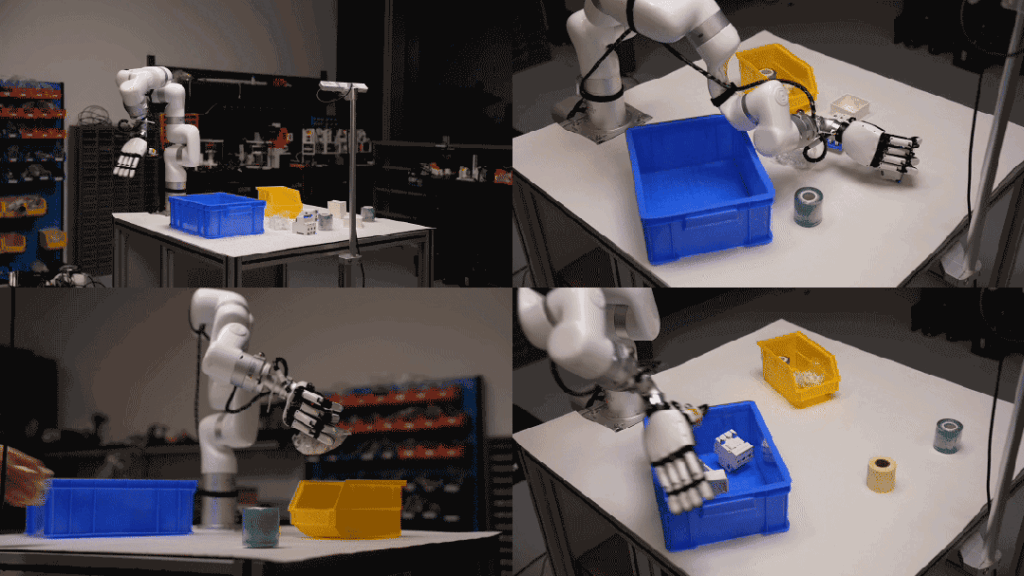
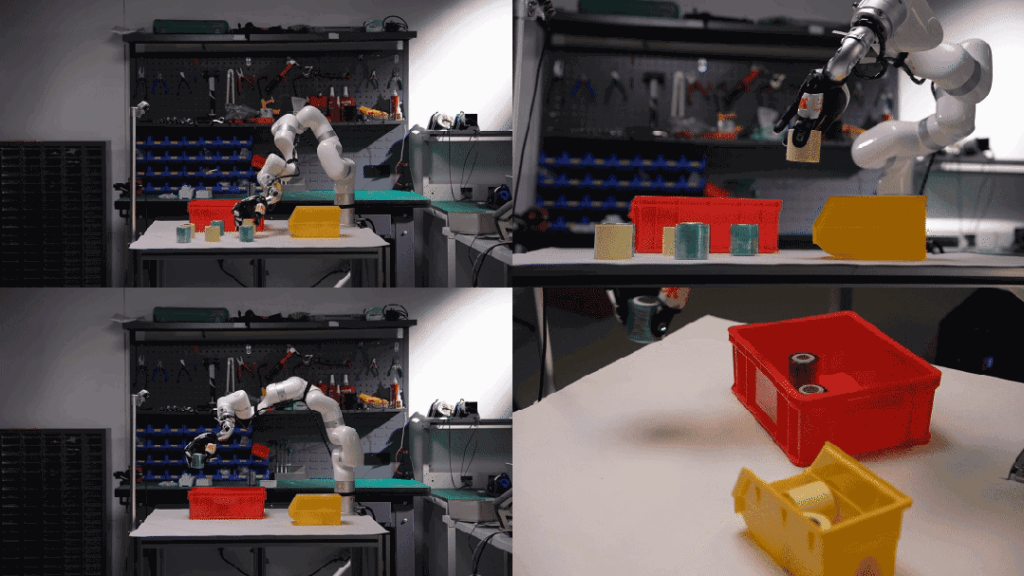
At an upcoming major international conference in Shenzhen, we will transition Visics-Agent from a home desktop scenario to an industrial one, demonstrating its performance in industrial sorting, continuous machine tending, and other tasks.
If you are interested in it, we welcome you to keep following our updates.
Visics-Agent is scheduled for official release in December 2026.
Whether you are a robotics developer, a researcher, or an enterprise exploring real-world robotics applications, we welcome you to become one of our first experience users.
Scan the QR code below to get early access to Visics-Agent!